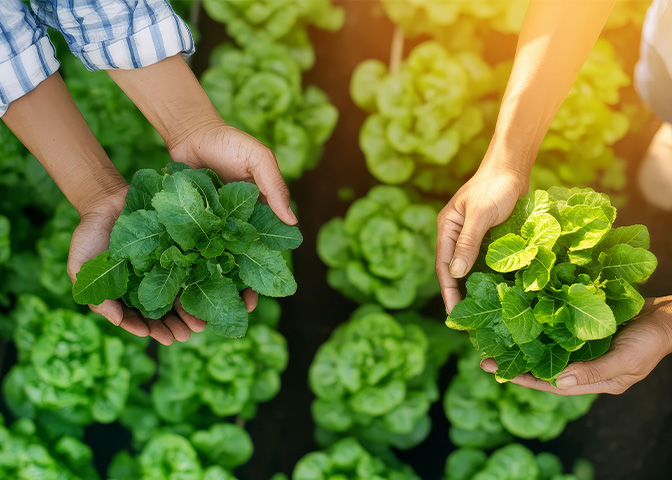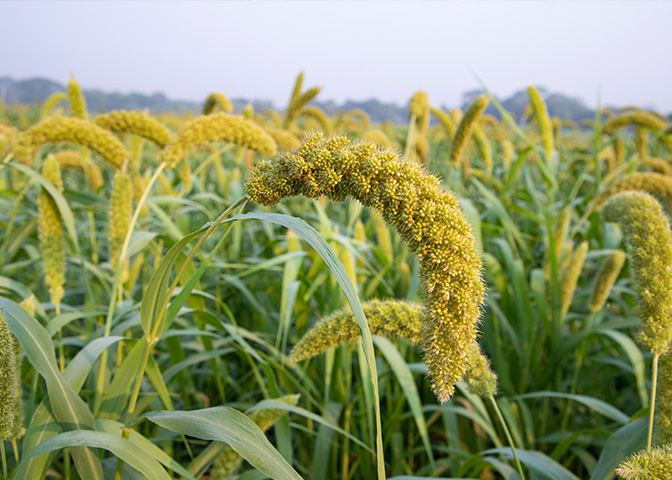
Kadamba introduced Teff, a climate-resilient and nutrient-rich crop, in drought-prone regions. Developed in collaboration with CSIR–CFTRI, Teff supports both economic and nutritional security.
Background
Teff, believed to have originated in Ethiopia, is one of the earliest domesticated crops and a staple of the Abyssinian civilisation. Drought-resistant and hardy, teff can be grown in both kharif and rabi seasons, making it ideal for the dry zones of Karnataka.
Its high calcium, fibre content and low glycaemic index make it ideal for addressing malnutrition and lifestyle diseases, while also opening access to premium health-food markets for farmers.
Farmers cultivating teff with Kadamba
Acres under teff cultivation
Calcium in every 100 g of teff
Approach
- Teff thrives in both moisture-stressed and waterlogged areas and is resistant to storage pests, lowering post-harvest costs.
- While domestic experience with teff is limited, its grain and flour have already gained a foothold in the health-food market, offering significant commercial opportunities.
Why teff
- A 100 g serving provides 180 mg of calcium, promoting strong bones, teeth and nails.
- Low glycaemic index and 40% resistant starch help manage blood sugar.
- High fibre content aids digestion and supports weight management.
Photographs
Teff nutrition
Nutrition facts per 100 g
- Calories
- 360.4kcal
- Protein
- 11.6g
- Total carbohydrate
- 71.3g
- Dietary fibre
- 11.0g
- Total fat
- 3.2g
- Iron
- 8.1mg
Teff recipes
From the field to the kitchen
Recipes are published on the Kadamba Group website.


Brochure
The Great Indian Teff — brochure
Select a page to view it full screen.
Photo gallery